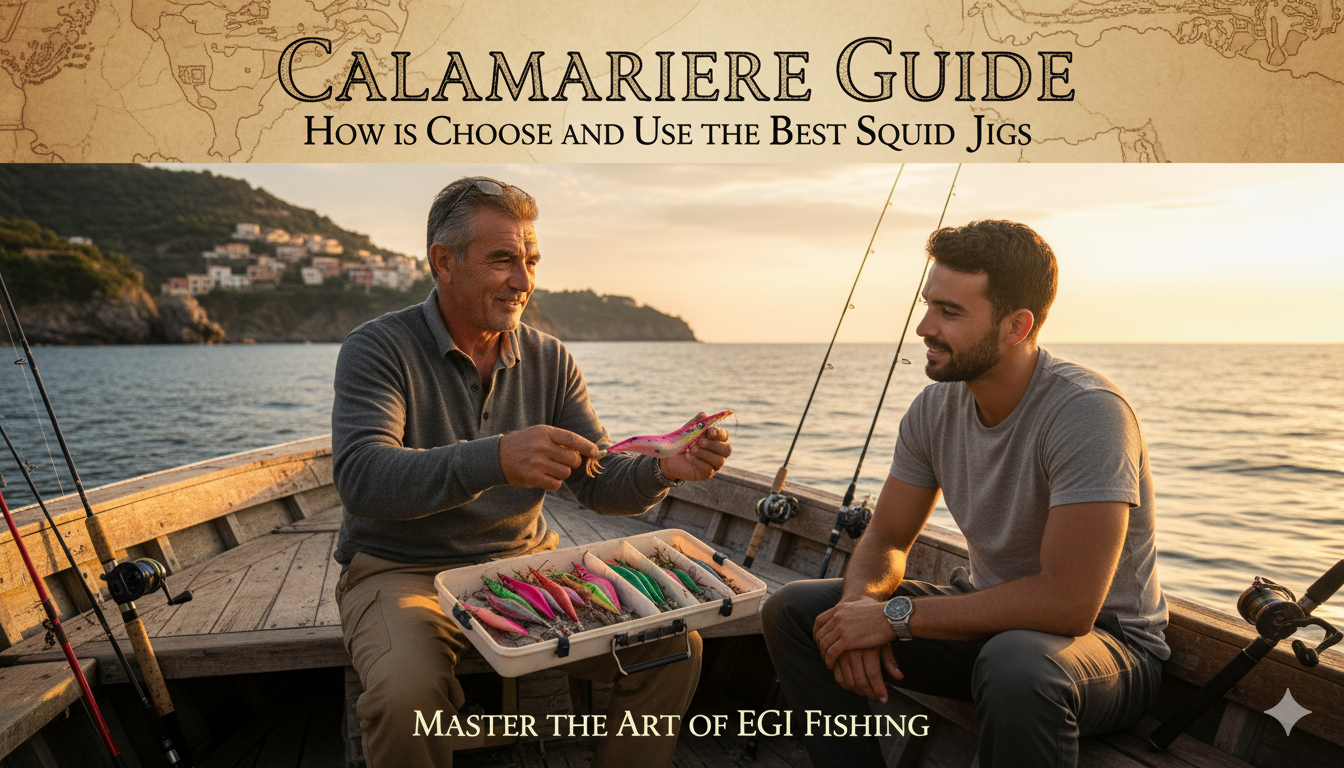
Have you ever stood on a pier at sunset and wondered how people catch those slippery, tasty squid? The secret weapon they use is called a calamariere. If you are new to fishing, that word might sound a bit fancy, but it is just the traditional name for a squid jig. These lures are special because they do not have standard hooks. Instead, they have a crown of sharp pins at the bottom. These pins grab onto the squid’s tentacles when they try to eat the lure.
Using a calamariere is like playing a game of hide-and-seek under the water. You want to make the jig look like a yummy shrimp or a small fish. When you move it correctly, the squid cannot resist taking a bite. Catching squid is a blast because it is active and fun for the whole family. Plus, fresh calamari is a delicious treat for dinner! In this guide, we will break down everything you need to know about these amazing lures so you can start catching more today.
What Exactly is a Calamariere?
A calamariere is a specialized fishing lure designed specifically for cephalopods like squid and cuttlefish. Unlike a regular fish hook that pokes through a mouth, this tool uses a “crown” of upward-pointing needles. Squid are very smart and have great eyesight, so these lures are often made with bright colors and “clothed” in textured fabric. This fabric feels like scales or skin to the squid, which makes them hold on tighter.
Most people use a calamariere by casting it out and letting it sink. The weight is usually located under the “chin” of the lure to help it dive at a specific angle. This angle is important because it mimics a real shrimp swimming toward the bottom. If you have ever seen one in person, you will notice they come in many sizes. Choosing the right size depends on how deep the water is and how big the squid are that day.
| Feature | Description | Why it Matters |
| Body Shape | Shrimp or fish-like | Mimics natural prey to fool the squid. |
| The Crown | Circular sharp pins | Ensures the squid stays stuck without a barb. |
| Cloth Cover | Rough textured fabric | Helps the squid’s suckers grip the lure easily. |
| Internal Rattle | Tiny beads inside | Creates sound to attract squid in murky water. |
| Lead Sinker | External weight | Controls the sink speed and the “walking” action. |
Choosing the Best Color for Your Squid Jig
Picking the right color for your calamariere can feel like a big puzzle. However, there is a simple rule that many experts follow: match the light. On bright, sunny days with clear water, natural colors like blue, silver, or green work best. These colors look like the real baitfish swimming around. If the water is a bit cloudy or it is getting dark, you should reach for bright orange, pink, or even a white calamariere.
Many modern jigs also have a “glow” or “UV” feature. This means they can light up in the dark! Squid are attracted to light, so a glowing calamariere is like a neon sign saying “Dinner is here!” I always keep a small flashlight in my pocket to “charge up” my glow lures before I throw them into the water. This little trick has helped me catch squid even on the darkest nights.
Understanding Sink Rates and Sizes
Not all lures sink at the same speed. When you buy a calamariere, you might see numbers like 2.5, 3.0, or 3.5 on the box. These are not weights in grams; they are size categories. A 3.0 size is the “all-around” favorite for most fishers. If the current is very strong or the water is deep, you need a heavier calamariere that sinks fast. If you use one that is too light, the wind and waves will just blow it away.
Watching your calamariere sink is actually the most important part of fishing. Most squid will grab the lure while it is falling. If it falls too fast, it looks unnatural and scares them. If it falls too slow, you might never reach the bottom where the squid are hiding. Finding that “perfect drop” is the secret sauce to becoming a pro at squid fishing.
How to Work the Lure Like a Pro
To catch a squid, you can’t just let the calamariere sit still. You need to give it some life! The most popular move is called “the hop.” You let the lure sink to the bottom, then give your rod two or three quick upward flicks. This makes the calamariere jump up through the water like a scared shrimp. After the jumps, you let it slowly drift back down.
This “jump and drift” pattern is what triggers the squid to attack. They watch the calamariere dance and then pounce on it as it starts to sink again. When you feel a heavy weight on your line, do not “strike” hard like you would for a bass. Instead, simply lift the rod firmly and start reeling steadily. Since the pins don’t have barbs, you must keep the line tight, or the squid will fall off!
Where to Find Squid During the Day
Many people think you can only catch squid at night, but that is a myth! You can use a calamariere during the day if you know where to look. Squid love to hide in seagrass beds or near rocky reefs. They use these spots to hide from big fish that want to eat them. Look for “inky” spots on the ground or pier; that is a sure sign that someone caught a squid there recently.
When fishing in the sun, try to cast your calamariere into the shadows of docks or over the edges of weed beds. The squid sit there waiting for food to swim by. Daytime squid are often more aggressive, but they are also more easily spooked. Use a thinner fishing line and more natural-looking lures to make sure they don’t get suspicious of your gear.
Night Fishing with a Calamariere
Nighttime is the most popular time to pull out your calamariere collection. Squid are naturally drawn to light sources, which is why piers with big streetlights are “hot spots.” The light attracts small baitfish and shrimp, and the squid follow them for a feast. If you are fishing from a boat, you can even buy special underwater lights to bring the squid right to you.
At night, the “glow-in-the-dark” calamariere is your best friend. I like to use a pink or orange lure with a glowing belly. The contrast of the bright color and the soft glow makes it very easy for the squid to find in the dark water. Remember to keep your movements a bit slower at night, as the squid are relying more on their sense of vibration and light than perfect vision.
Taking Care of Your Fishing Gear
A good calamariere can last a long time if you treat it well. Saltwater is very tough on fishing gear and can make the sharp pins rusty. After every trip, you should rinse your lures in fresh water. This simple step keeps the pins sharp and the fabric colors bright. If the pins get bent out of shape, you can carefully push them back into a circle with your thumb.
Also, watch out for “squid ink!” When you catch a squid, it will often spray ink all over your calamariere. If you let that ink dry, it can ruin the look of the lure and might even smell bad to other squid. I always carry an old toothbrush to scrub the ink off my calamariere right after I catch one. Clean lures always catch more fish than dirty ones!
Safety Tips for Squid Fishing
Squid fishing is very safe, but there are two things to watch out for: the beak and the ink. Every squid has a small, sharp beak hidden in the middle of its tentacles. It won’t hurt much, but it can give you a little nip if you put your finger there. When removing your calamariere, hold the squid by the “hood” or the back of its head to stay away from the business end.
The second thing is the “ink blast.” A squid can spray ink a long way! To avoid getting your favorite shirt ruined, point the squid away from you as you lift it out of the water. Some people wait a few seconds for the squid to “spit” its ink back into the ocean before bringing it onto the pier. If you do get inked, just laugh it off—it is a badge of honor for using your calamariere successfully!
Why Every Fisherman Needs a Calamariere
If you are bored of standard fishing, switching to a calamariere is a great way to spice things up. It is a very active style of fishing that keeps you moving and thinking. You have to think about the depth, the current, and the color of the water. It is like being a scientist and an athlete at the same time. Plus, squid are everywhere in the ocean, so you can find them almost anywhere you go.
Using a calamariere is also very affordable. You don’t need a huge boat or expensive electronics to get started. Just a simple rod, some line, and a couple of good jigs will get you in the game. It is a fantastic way to spend an evening with friends or teach kids about the ocean. Once you see that first squid following your lure to the surface, you will be hooked forever!
Frequently Asked Questions
1. What is the best size calamariere for beginners?
For most people, a size 3.0 is the perfect place to start. It is heavy enough to cast easily but sinks at a speed that attracts most squid.
2. Do I need a special rod to use a calamariere?
While you can use a regular rod, a “squid rod” or “Egi rod” is better. These rods are very flexible at the tip, which helps prevent the squid’s delicate tentacles from tearing off the hooks.
3. Why does my calamariere have fabric on it?
The fabric mimics the texture of prey. When a squid grabs it, its tiny suckers “hook” into the fabric, making the squid feel like it has caught something real and tasty.
4. Can I catch squid from the beach?
Yes! As long as there is some structure like rocks or seaweed nearby, you can cast your calamariere from the shore and catch plenty of squid.
5. How long do I let the lure sink?
A good rule of thumb is to count to ten. If you don’t hit the bottom, count to fifteen next time. You want the calamariere to be near the bottom without getting stuck in the weeds.
6. Is squid ink permanent on clothes?
It can be! It is best to wear dark clothes or old gear when fishing. If you get inked, wash it with cold water and soap as fast as possible.
Conclusion: Get Out There and Fish!
Squid fishing is one of the most rewarding hobbies you can pick up. With the right calamariere and a little bit of patience, you will be bringing home fresh seafood in no time. Remember to experiment with different colors and sink speeds until you find what the squid like. The most important thing is to have fun and enjoy the fresh air. So, grab your gear, head to the nearest pier, and see what you can catch with your new calamariere!