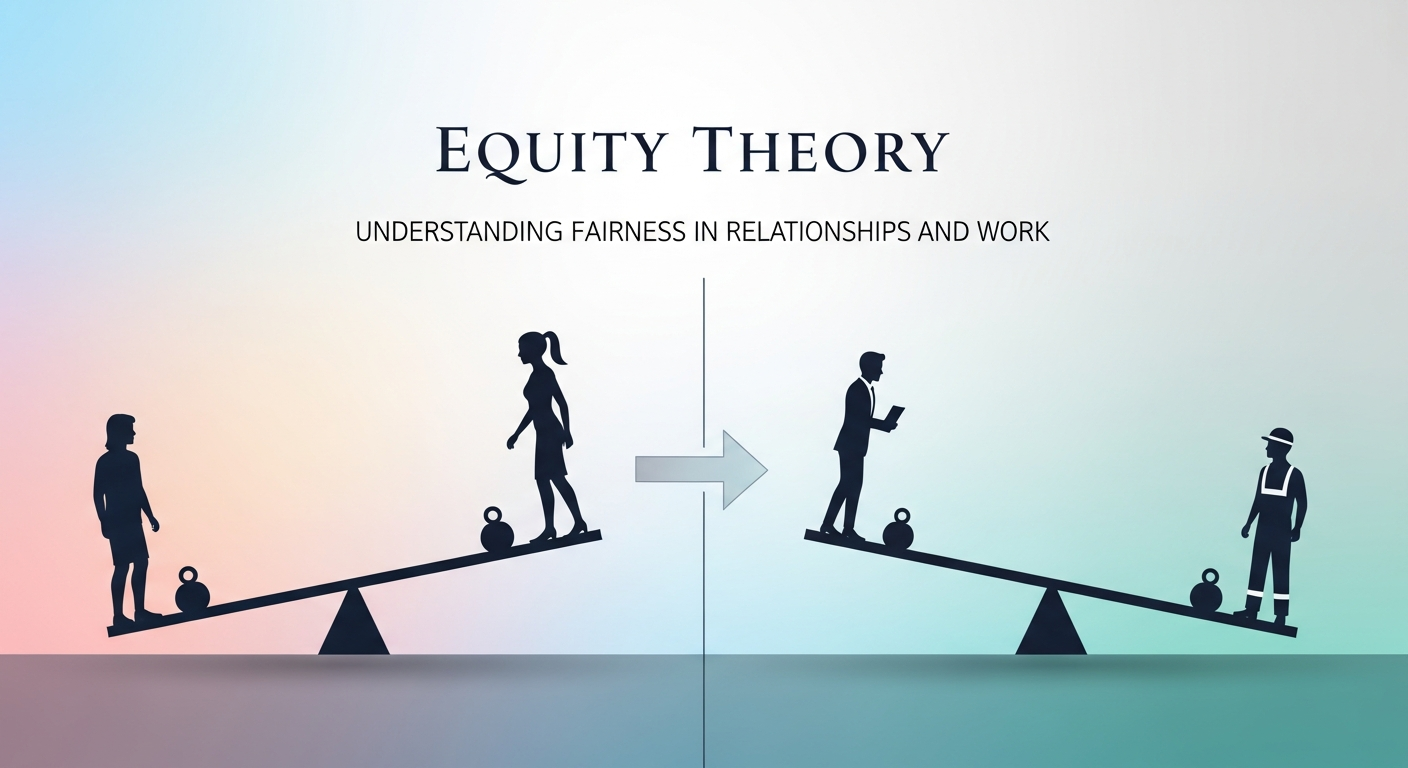
Have you ever felt upset when you worked hard, but someone else got more rewards? That feeling of unfairness is what equity theory helps explain. Equity theory is all about fairness. It shows how people judge their effort and rewards compared to others. When things feel fair, people feel happy and motivated. But when things seem unfair, they feel unhappy or even upset. This theory helps us understand relationships at work, home, and with friends.
In this article, we will talk about what equity theory is, why it matters, and how it works in everyday life. You will also learn about the person who created this idea and how it helps people in their jobs and relationships. Let’s dive into the world of fairness and balance with equity theory!
What Is Equity Theory?
Equity theory is a way to look at fairness between what people put in and what they get back. It was created by psychologist John Stacey Adams in 1963. According to the theory, people feel good when they believe they get fair rewards for their efforts. But if someone thinks they get less than they deserve, or someone else gets more, they feel unhappy. This can happen at work, in friendships, or in families.
How Does Equity Theory Work?
People compare their input (what they put in) with their output (what they get). Inputs can be time, effort, skills, or loyalty. Outputs are things like salary, respect, or recognition. If the ratio of input to output is equal between two people, equity exists. If not, people may feel “inequity.”
For example, if you work hard but get paid less than a coworker who works less, you may feel treated unfairly. This can cause stress or reduce motivation.
Inputs and Outputs: What Are They?
- Inputs: Skills, experience, effort, time, and loyalty.
- Outputs: Pay, praise, bonuses, promotions, and respect.
People naturally want their inputs to be fairly rewarded. When rewards don’t match effort, they feel unhappy or may act to fix the imbalance.
Why Is Equity Theory Important?
Equity theory is important because it explains why people want fairness. When people feel treated fairly, they work harder and stay loyal. In relationships, fairness makes people feel respected and valued. When fairness is missing, it causes problems like frustration or arguments.
Equity Theory in the Workplace
In offices and factories, equity theory helps explain employee motivation. If workers believe their pay and rewards are fair, they are happier and more productive. Managers use this theory to create fair policies, rewards, and feedback systems.
Equity Theory in Personal Relationships
Fairness is also key in friendships and families. If one person feels they give more than they get, the relationship may suffer. Equity theory helps people understand and improve fairness in these bonds.
Real-Life Examples of Equity Theory
Imagine two friends sharing chores. If one cleans more but both enjoy the same free time, the one who cleaned more may feel it’s unfair. Or at work, if two employees do the same job but one earns more, the other might feel upset.
How People React to Inequity
When people see unfairness, they may:
- Work less or reduce effort
- Ask for more rewards
- Change their perception of the effort or rewards
- Leave the job or relationship
Understanding these reactions helps leaders and people solve fairness problems.
Ways to Restore Equity
People try to fix unfair situations by:
- Changing their effort or work
- Asking for raises or rewards
- Changing how they see the situation
- Leaving the unfair situation
Benefits of Equity Theory
Using equity theory can lead to:
- Better teamwork and cooperation
- Happier employees and friends
- More fairness in rewards and recognition
- Stronger, healthier relationships
Equity Theory vs. Equality: What’s the Difference?
Equity means fairness based on contribution. Equality means everyone gets the same thing. Equity theory focuses on fair balance, not just equal shares.
Equity Theory and Motivation
People’s motivation grows when they feel their work is fairly rewarded. Equity theory shows that fairness affects how much energy people put into tasks.
FAQs About Equity Theory
1. What is equity theory in simple words?
Equity theory means people want fair treatment for what they do compared to others.
2. Who created equity theory?
John Stacey Adams created equity theory in 1963.
3. How does equity theory affect motivation?
If people feel treated fairly, they work harder. If not, they may lose interest or work less.
4. What happens if there is unfairness in equity theory?
People might feel unhappy, work less, or leave the job or relationship.
5. Can equity theory be used outside work?
Yes, it helps explain fairness in friendships and family too.
6. How can equity be restored?
By changing effort, rewards, or how people see the situation.
Conclusion: Why Equity Theory Matters
Equity theory helps us understand why fairness is important in life. Whether at work, with friends, or in family, feeling treated fairly makes us happier and more motivated. When things feel unfair, it causes stress and unhappiness. Knowing about equity theory can help us fix problems and build better relationships. Next time you feel something is unfair, think about equity theory — it might help you see things more clearly and find a good solution.