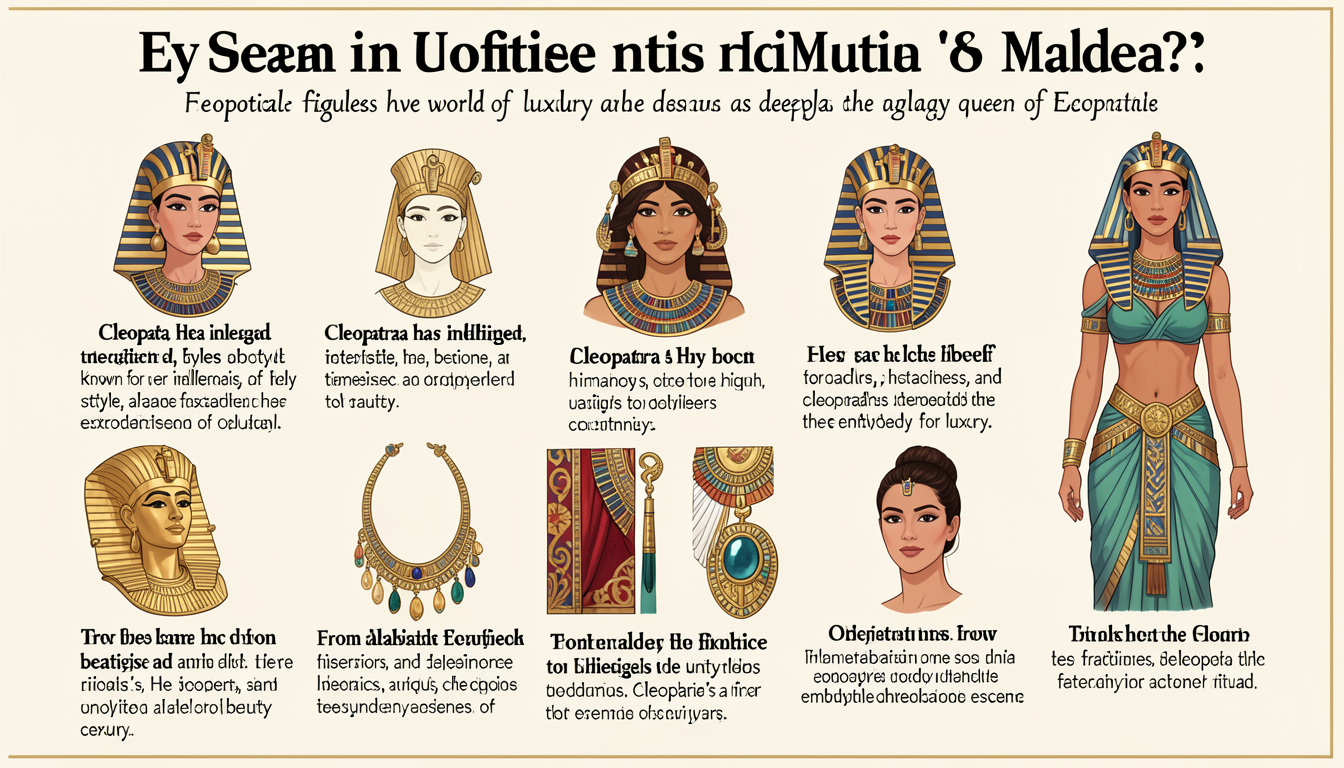
Introduction: Cleopatra as an Eternal Symbol of Luxury and Style
Few historical figures have influenced the world of luxury and fashion as deeply as Cleopatra, the legendary queen of ancient Egypt. Known for her intelligence, charisma, and extraordinary sense of style, Cleopatra has become a timeless icon of beauty and opulence. Her image has fascinated historians, artists, designers, and storytellers for centuries. From elaborate gold jewelry and rich fabrics to unique beauty rituals, Cleopatra’s lifestyle embodied the essence of luxury.
The fascination with Cleopatra goes beyond history. Modern fashion houses, jewelry designers, and luxury brands continue to draw inspiration from her legacy. Her style represented power, elegance, and mystery, making her an enduring symbol of sophisticated glamour. The rare secrets associated with Cleopatra’s beauty and fashion choices reveal how luxury was not only a display of wealth but also a tool of influence and cultural identity.
Understanding the connection between luxury, fashion, and the rare Secrets of Cleopatra offers a glimpse into how ancient traditions still shape modern ideas of beauty and elegance.
Cleopatra: The Queen Who Defined Royal Luxury
Cleopatra VII, the last active ruler of the Ptolemaic Kingdom of Egypt, lived during a time when royal courts were known for their lavish lifestyles. As queen, she had access to some of the most precious materials and skilled artisans in the ancient world. Gold, precious stones, exotic perfumes, and luxurious fabrics were essential elements of royal presentation.
Luxury during Cleopatra’s era was closely tied to political power. A ruler’s appearance reflected their authority and divine connection. Cleopatra understood this relationship perfectly. Her carefully crafted image projected strength, intelligence, and wealth, making her not only a powerful leader but also a symbol of refined elegance.
Historical accounts describe her palace in Alexandria as a place filled with magnificent art, elaborate decorations, and rare treasures from across the Mediterranean. Visitors were often astonished by the richness of the environment and the queen’s remarkable presence. Cleopatra’s mastery of luxury was not merely about indulgence; it was a strategic expression of influence and prestige.
The Role of Jewelry in Cleopatra’s Fashion
Jewelry played a central role in Cleopatra’s iconic style. Ancient Egypt had a long tradition of intricate jewelry design, and Cleopatra elevated it to new heights. Gold was the most treasured metal, believed to represent the eternal power of the sun. It was widely used in crowns, necklaces, bracelets, and rings worn by the queen.
Cleopatra was often depicted wearing elaborate collars known as “wesekh,” which were wide necklaces made from layers of gold and colorful gemstones. These pieces were not only decorative but also symbolic. Stones like turquoise, lapis lazuli, and emeralds were believed to carry protective and spiritual properties.
The queen’s jewelry reflected both luxury and meaning. Certain symbols, such as the cobra, scarab, and lotus flower, represented protection, rebirth, and divine authority. By incorporating these motifs into her fashion, Cleopatra reinforced her connection to Egyptian traditions and mythology.
Modern jewelry designers frequently draw inspiration from these ancient styles. Bold gold pieces, colorful gemstone combinations, and Egyptian-inspired motifs continue to appear in contemporary luxury collections, demonstrating Cleopatra’s lasting influence on fashion.
Beauty Rituals and the Secrets of Cleopatra
One of the most famous aspects of Cleopatra’s legacy involves her beauty rituals. Historical legends often mention her dedication to skincare, fragrance, and cosmetic preparation. While some stories have been exaggerated over time, there is evidence that Egyptian beauty practices were highly advanced for their era.
Cleopatra was believed to use natural ingredients such as honey, milk, and plant oils to maintain smooth and healthy skin. Milk baths, often associated with her name, symbolized both luxury and self-care. Milk contains natural lactic acid, which gently exfoliates the skin, making it softer and brighter.
Cosmetics also played an important role in Egyptian fashion. Cleopatra’s dramatic eye makeup became one of the most recognizable elements of her style. Dark kohl eyeliner was used to create bold, elongated eye shapes. This cosmetic technique was not only aesthetic but also practical, as the ingredients helped protect the eyes from sun glare and infections.
Perfumes and aromatic oils were another luxury associated with Cleopatra. Ancient Egypt was known for producing sophisticated fragrances using ingredients like myrrh, frankincense, and lotus oil. Cleopatra reportedly used distinctive scents as part of her royal presence, making fragrance an essential element of her luxurious identity.
Fashion as a Symbol of Power
Cleopatra’s fashion choices were closely linked to her political strategy. As a ruler who interacted with powerful Roman leaders such as Julius Caesar and Mark Antony, she understood the importance of appearance and symbolism.
Her clothing often featured fine linen fabrics, carefully woven to create lightweight yet elegant garments suitable for Egypt’s warm climate. These fabrics were sometimes decorated with gold thread, colorful embroidery, and intricate patterns.
By combining traditional Egyptian designs with influences from Greek and Roman culture, Cleopatra presented herself as both a guardian of ancient heritage and a cosmopolitan ruler. Her fashion communicated sophistication and authority, helping her command respect from allies and rivals alike.
Luxury fashion, in Cleopatra’s case, functioned as a visual language. Every piece of jewelry, fabric, and cosmetic choice contributed to the image she projected to the world.
Cleopatra’s Influence on Modern Luxury Fashion
Even after more than two thousand years, Cleopatra remains a powerful source of inspiration for modern designers. Fashion houses frequently revisit Egyptian themes when creating high-end collections. Runway shows have featured gold accessories, dramatic eye makeup, and flowing gowns reminiscent of ancient royal attire.
The fascination with Cleopatra’s style also appears in film and popular culture. Iconic portrayals in cinema have reinforced the queen’s image as the ultimate symbol of glamour and sophistication. These interpretations often highlight the luxurious costumes, sparkling jewelry, and elaborate makeup associated with her legend.
Luxury brands often incorporate Egyptian motifs such as pyramids, scarabs, and sun symbols into their designs. These elements evoke the mystique of Cleopatra’s era while adding a sense of historical depth to modern fashion.
In this way, Cleopatra’s legacy continues to shape how designers interpret luxury and elegance in the contemporary world.
The Mystique of Cleopatra’s Rare Secrets
Part of Cleopatra’s enduring appeal lies in the mystery surrounding her life. Historical records provide glimpses into her world, but many details remain uncertain. This sense of mystery has allowed myths and legends to flourish.
Stories about Cleopatra’s secret beauty treatments, rare perfumes, and extraordinary treasures have become part of cultural imagination. Whether entirely factual or partly legendary, these tales contribute to the queen’s image as a figure of enchanting sophistication.
The idea of “rare secrets” associated with Cleopatra often refers to the combination of knowledge, craftsmanship, and luxury that defined her lifestyle. Ancient Egyptian artisans possessed remarkable skills in metallurgy, perfume-making, and cosmetic preparation. These practices were closely guarded and passed down through generations.
Today, historians and researchers continue to study ancient texts and archaeological discoveries to better understand the techniques used during Cleopatra’s time. Each new finding adds another layer to the story of a queen who mastered the art of luxury.
The Enduring Legacy of Cleopatra’s Style
Cleopatra’s influence extends far beyond her historical era. She represents the perfect blend of intelligence, beauty, and cultural sophistication. Her ability to combine luxury with symbolism created a legacy that continues to inspire fashion, art, and storytelling.
The connection between luxury and Cleopatra’s style reminds us that fashion is more than appearance. It can communicate identity, power, and cultural values. Cleopatra understood this relationship long before the modern fashion industry existed.
Designers today still look to her for inspiration when creating pieces that convey boldness, elegance, and timeless glamour. From dramatic jewelry to iconic makeup styles, elements of Cleopatra’s image remain visible in contemporary fashion trends.
Conclusion: Luxury, Fashion, and the Timeless Secrets of Cleopatra
The story of Cleopatra reveals how luxury and fashion can shape a lasting legacy. Through her carefully crafted appearance, the queen of Egypt created an image that symbolized power, beauty, and refinement. Her use of gold jewelry, elegant fabrics, exotic perfumes, and distinctive cosmetics transformed her into a timeless icon of style.
The rare secrets associated with Cleopatra’s beauty rituals and fashion choices continue to fascinate people around the world. These traditions demonstrate how ancient cultures understood the importance of self-presentation and artistic craftsmanship.
Today, Cleopatra’s influence can still be seen in modern luxury fashion, jewelry design, and beauty trends. Her story reminds us that true elegance is not only about wealth but also about creativity, confidence, and the ability to leave a lasting impression.
Through the enduring connection between luxury, fashion, and Cleopatra’s legendary secrets, the queen’s legacy remains as captivating and inspiring as it was more than two thousand years ago.